

SAP Revenue Accounting and Reporting
Expert Capabilities and Strengths in Implementing SAP Revenue Accounting and Reporting (RAR) End-to-EndAs a specialized provider of software and application development solutions, GlenIT brings robust expertise and a comprehensive approach to implementing SAP Revenue Accounting and Reporting (RAR) end-to-end. SAP RAR is essential for organizations needing to comply with ASC 606/IFRS 15 revenue recognition standards and to manage complex revenue accounting processes across multiple sectors. Below, we outline GlenIT's unique capabilities and strengths in delivering a seamless, compliant, and efficient SAP RAR implementation..

1. Expertise in End-to-End SAP RAR Implementation
GlenIT provides a holistic, full-cycle approach to implementing SAP RAR, encompassing every phase from initial assessment and design to deployment, testing, and ongoing support. This ensures that each client’s specific revenue accounting needs are addressed precisely and in compliance with regulatory requirements.
- Requirement Analysis and Design: GlenIT conducts in-depth consultations to identify business needs, evaluate existing revenue models, and tailor the SAP RAR configuration to align with specific client requirements.
- Configuration and Customization:With an agile approach to SAP RAR configuration, GlenIT adapts standard SAP RAR functionalities to meet unique business rules, custom revenue recognition policies, and other specialized needs.
2. In-Depth Knowledge of Revenue Recognition Standards
GlenIT possesses strong expertise in the intricacies of both ASC 606 and IFRS 15, allowing them to set up SAP RAR in a way that ensures full compliance with these standards. By incorporating these standards’ requirements into the SAP RAR implementation, GlenIT enables businesses to:
- Accurately recognize revenue across complex, multi-element contracts.
- Align revenue recognition with performance obligations and contractual terms.
- Avoid costly errors or compliance issues by implementing accurate, automated calculations for revenue recognition.
3. Proven Data Integration Capabilities
Revenue recognition depends heavily on data from various sources, including sales, billing, and finance systems. GlenIT excels at integrating SAP RAR with other enterprise systems, ensuring seamless data flows that support accurate and timely revenue reporting.
- Integration with SAP and Non-SAP Systems: GlenIT can connect SAP RAR with ERP, CRM, billing, and legacy systems, streamlining data input and maintaining consistency across revenue reporting channels.
- Real-Time Data Sync: With GlenIT’s integration expertise, clients can trust that revenue-related data is updated in real-time, improving visibility and decision-making.
4. Automated and Transparent Revenue Recognition Processes
One of the primary benefits GlenIT offers is a streamlined, automated approach to revenue recognition, reducing manual processes and minimizing errors.
- Custom Automation Solutions: GlenIT develops custom automation scripts and configurations within SAP RAR to reduce the burden on accounting teams, freeing up resources and enhancing accuracy.
- Detailed Reporting and Audit Trail: SAP RAR implementations by GlenIT come with transparent reporting features, enabling businesses to track revenue activities and access an audit trail for all revenue recognition activities.
5. Comprehensive Testing and Quality Assurance
GlenIT prioritizes rigorous testing and quality assurance to ensure SAP RAR operates smoothly post-implementation. The testing phase is designed to validate the configuration accuracy, compliance adherence, and seamless integration of SAP RAR into the client’s existing workflows.
- User Acceptance Testing (UAT): GlenIT guides clients through comprehensive UAT, verifying that the system meets all requirements and performs effectively in real-world scenarios.
- End-to-End Testing for Compliance: GlenIT conducts thorough end-to-end testing to ensure full compliance with ASC 606/IFRS 15 standards and that every revenue recognition scenario is covered.
6. Proven Data Integration Capabilities
Revenue recognition depends heavily on data from various sources, including sales, billing, and finance systems. GlenIT excels at integrating SAP RAR with other enterprise systems, ensuring seamless data flows that support accurate and timely revenue reporting.
- Integration with SAP and Non-SAP Systems: GlenIT can connect SAP RAR with ERP, CRM, billing, and legacy systems, streamlining data input and maintaining consistency across revenue reporting channels.
- Real-Time Data Sync: With GlenIT’s integration expertise, clients can trust that revenue-related data is updated in real-time, improving visibility and decision-making.
7. Industry-Specific Customization and Best Practices
GlenIT understands that revenue recognition requirements can vary significantly across industries. They bring deep industry knowledge to each SAP RAR project, offering industry-specific customization and best practices that support unique business models, from software and telecommunications to manufacturing and professional services.
Conclusion
GlenIT stands out as a trusted partner in implementing SAP RAR due to its comprehensive approach, technical expertise, and commitment to client success. By offering customized, compliant, and efficient end-to-end SAP RAR solutions, GlenIT empowers businesses to optimize their revenue recognition processes, enhance operational transparency, and stay compliant with global standards.
Here's an outline for creating a SAP Revenue Accounting and Reporting (RAR) Implementation Architecture Diagram. This diagram will capture the end-to-end architecture of SAP RAR within an enterprise system, showing its interaction with various modules, data flows, and system components.
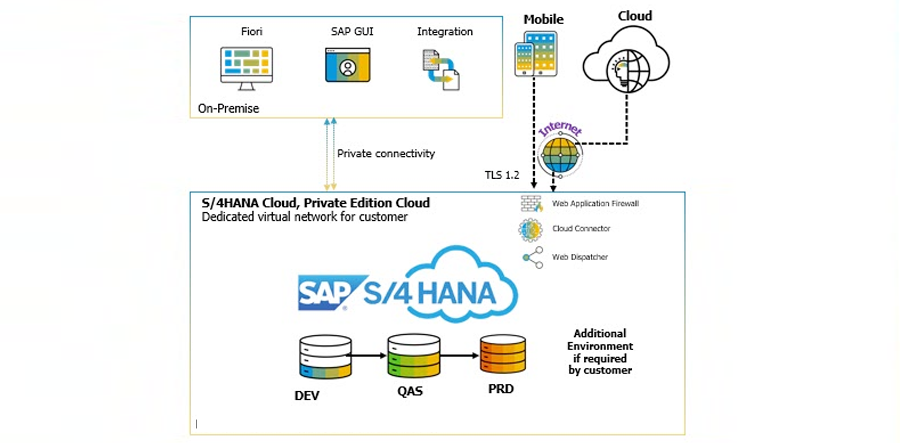
Diagram Description: The architecture diagram highlights the integration of SAP RAR with other essential business applications and databases in an enterprise environment. Key elements in the architecture include source systems (such as SAP S/4HANA, CRM, Billing), data transformation, and reporting components.
Core Elements in the SAP RAR Architecture
- Source Systems:
- SAP S/4HANA: Primary ERP system for finance, sales, and distribution data.
- SAP CRM (Customer Relationship Management): Manages customer contracts and sales orders.
- Billing Systems: Source for transactional data, providing revenue-related billing events.
- Other External Systems: Custom or legacy systems that handle revenue data, which may require specific connectors to SAP RAR.
- Data Extraction Layer:
- Data Extraction Services: This layer extracts relevant financial data, such as billing, revenue postings, and performance obligations, from source systems.
- Data Transformation & Mapping Layer:
- SAP RAR Connector: Transforms data from source systems into revenue accounting data, ensuring it aligns with ASC 606 / IFRS 15 standards. This connector may reside within SAP S/4HANA or work as a middleware for external systems.
- Mapping Rules: These include rules for mapping contract data, performance obligations, and billing details to align with SAP RAR requirements.
- SAP RAR Core:
- Contract and Performance Obligation Management: Manages contracts, identifying and tracking performance obligations per ASC 606/IFRS 15.
- Revenue Posting Engine: Processes revenue recognition and revenue adjustments, posting results to SAP Financials.
- Revenue Recognition Engine: Automates the process of recognizing revenue according to predefined rules.
- Financial Accounting (FI) System:
- General Ledger (GL): Posts all revenue accounting entries processed by SAP RAR.
- Controlling (CO): Tracks cost and revenue data for profitability analysis.
- Reporting and Analytics:
- SAP Analytics Cloud (SAC): Provides dashboards and reports on revenue data for financial analysis, forecasting, and compliance reporting.
- SAP BW/4HANA (optional): Provides data warehousing capabilities for advanced analytics and reporting.
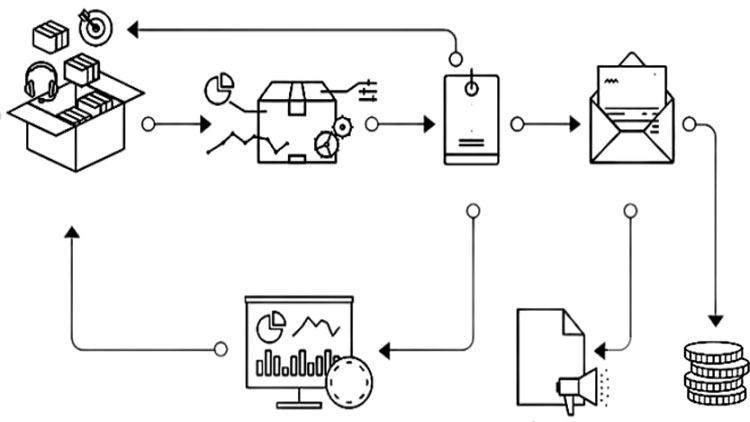
Diagram Description:This architecture provides a structured visualization of SAP RAR and can serve as a reference for GlenIT when implementing and integrating SAP RAR in a client environment. Let me know if you would like a graphical representation or further details on any specific part of this architecture.
Explanation of Data Flow

SAP BRIM Implementation Strategy for Clients
GlenIT offers comprehensive SAP BRIM (Billing and Revenue Innovation Management) implementation services, designed to streamline clients' billing and revenue processes, optimize subscription-based and usage-driven business models, and ensure compliance with complex industry standards. Leveraging expertise in SAP BRIM components—including Subscription Order Management (SOM), Convergent Charging (CC), Convergent Invoicing (CI), and SAP RAR (Revenue Accounting and Reporting)—GlenIT crafts tailored strategies that address each client’s unique operational needs and long-term goals.
Capabilities and Approach:
- Strategic Roadmap: Define clear project milestones aligned with business objectives to ensure a smooth transition to SAP BRIM.
- End-to-End Integration: Seamlessly integrate SAP BRIM with existing ERP and CRM systems for unified billing and customer management.
- Customization & Configuration: Tailor SAP BRIM modules to support complex pricing models, partner settlements, and multi-level billing cycles.
- Compliance & Revenue Recognition: Ensure regulatory compliance (e.g., IFRS 15 / ASC 606) through accurate revenue recognition and reporting.
- Training & Support: Equip client teams with knowledge and support for long-term success.